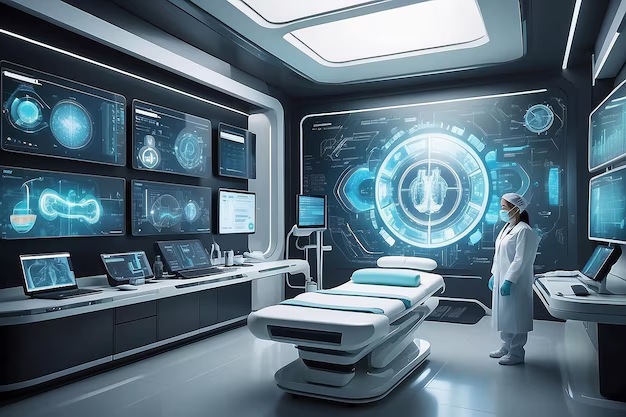
What will medicine look like in 100 years? While it initially seems speculative to answer accurately, understanding what medicine means from first principles can suggest a compelling answer. The human body will remain unchanged, but our ability to gather and interpret data is exponentially increasing and will transform how we deliver care. The NHS 10-year plan sets out pragmatic milestones, yet it is equally valuable to imagine medicine without resource constraints - and work reverse engineer to create today’s innovations.
Medicine today is reactive - we treat disease once it appears. Over the next century, it will become proactive, personalised, decentralised, and globally equitable, powered by AI and continuous data integration.
Reactive to Proactive Care
The biggest shift will be the move from treating illness after it occurs to preventing it altogether. Predictive genomics will map out health risks from birth, allowing healthcare systems to anticipate problems long before symptoms emerge. Instead of annual check-ups, continuous monitoring through wearables, implants, or even nanotechnology will quietly track biomarkers in real time. Nutrition and lifestyle interventions will be tailored not just to general guidelines but to the individual’s specific biology and circumstances. Even vaccines may expand beyond infectious diseases, becoming tools to delay or prevent chronic conditions (e.g. Alzheimer’s).
Hyper-Personalised, Data-Driven Medicine
Advances in AI and compute power will allow doctors to integrate every strand of health data - EHRs, genomics, wearables, and lifestyle information - into a single, dynamic picture of the patient. Pharmacogenomics will guide drug choice or design based on DNA, while regenerative medicine could grow new tissues or even whole organs from a person’s stem cells.
Just as importantly, mental and physical health will no longer be treated as separate spheres. Future medicine will fully recognise the impact of stress, trauma, and environment on physical disease, creating care plans that treat the whole person rather than the body in isolation.
Decentralised, Patient-Centred Systems
Healthcare is already moving away from hospitals as the default point of care (analogous to how cryptocurrencies shifted influence from banks to individuals). Instead, medicine will be increasingly woven into daily life, with smart diagnostics, home testing, and telemedicine managing most conditions beyond hospital walls.
AI will act as a cognitive partner, analysing patient histories and vast medical literature while clinicians focus on empathy, ethics, and guiding decisions. Doctors will not be replaced, but augmented by AI’s ability to process complex data at scale. Hospitals will remain essential, but largely for surgery, trauma, and complex interventions where robotic systems and advanced procedures dominate. For routine issues, chronic disease monitoring, and early symptom triage, patients will engage first with AI and remote systems, escalating to in-person care only when necessary.
Extending Healthspan & Global Equity
The final frontier will be redefining the limits of human health. Aging, once considered inevitable, could just be a disease we can cure. Therapies to rejuvenate aging cells, longevity drugs, and even gene editing could extend healthy life well past 100 and potentially forever.
The promise of future medicine must be universal. Advances in AI and biometrics will help bring accessible healthcare to communities with limited literacy or resources, while international cooperation will reduce global disparities. Planetary health - addressing the climate and environmental factors that underpin disease - will also become inseparable from clinical practice. Medicine will not only keep individuals healthier for longer, but also reshape societies by embedding health equity into its foundations.
Conclusion
Without limits, the ultimate vision is nothing less than the end of disease and of mortality itself. Healthcare would fade into the background of everyday life, embedded so deeply that illness rarely emerges. Doctors, working alongside AI, would no longer be defined by curing sickness but by guiding humanity toward limitless health and longevity. In this future, immortality is not a fantasy, but the logical conclusion of medicine’s evolution.