
1. For MST Applicants
Contrary to belief, Management Studies Tripos (MST) isn’t solely about business - it’s about understanding how people and the world around you works.
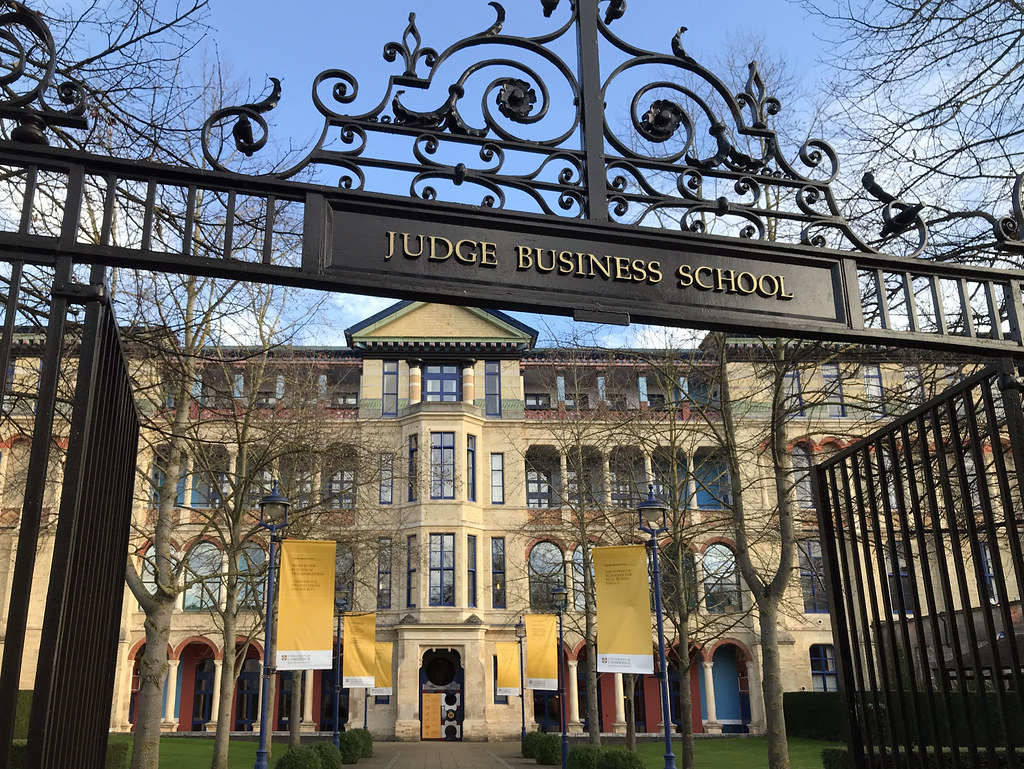
Whether you come from STEM, medicine, or humanities, the MST offers an invaluable year to understand how organizations, people, and decisions work in practice within the ecosystem of The Judge Business School. Make sure to check the MST applicant details for full details!
Entry is quite competitive, usually requiring a 66.5% or higher in your second year. Since you’ll be surrounded by high-achieving students, achieving a First can be more challenging. For third years (including intercalating medics), this year contributes 70% of your final degree. For fourth years, however, the degree grade is already secured, allowing a more relaxed approach.
Ideal to pivot into consulting or finance, or just broaden your worldview. A common misconception (often from engineers and scientists) is that management is “soft” or less technical. In reality, skills of communication and teamwork are in fact the key differentiators between successful and unsuccessful outcomes. MST really teaches you how collaboration, not competition, drives sustained success; indeed, if you play solo, you’ll always lose to a team.
2. For MST Students
Academic Overview
Note: As of 2025/26, MS1 is now exam-assessed, and MS5 is coursework-based. This guide builds and emphasises points from the official documents, not replace them!
Core Modules:
MS1: Organisational Behaviour – Personality, culture, leadership. Conceptual and reflective; more about understanding people than memorising studies. Lectures are light, but referenced studies provide depth useful for the exam.
MS2: Quantitative Methods – Hypothesis testing, Monte Carlo simulation, decision trees, regression, machine learning. Practical and well-taught, optional computer labs are useful. Straightforward once understood, with high-scoring potential up to 100%. Plenty of resources, homework and support sessions available if you are feeling stuck on some of the concepts. Once you grasp the concepts, you’ll find most of the questions are quite similar so will be able to ace them! Take note that the actual exam feels much more time pressurised, especially when you are hand-writing your working out - make sure to practice doing past papers by hand under timed conditions. Equation sheet and normal distribution table are provided.
MS3: Economics of Firms & Markets – The most challenging and differentiating module. Involves further maths concepts (e.g. partial differentiation). Definitely a key differentiator in grades, there seems to be a consensus this is the hardest topic in MST! Spend some time going through each slide in each lecture to make sure you understand the logic, which allows you to derive most of the maths.
MS4: Accounting & Finance – The most practically useful module - understanding balance sheets, income statements, and cash flow statements make you much more financially literate than the average person. Concepts look difficult initially but it’s all logical. Finance is mostly about understanding and using equations, with some written questions as well.
MS5: Operations Management – This can seem quite nebulous and monotonous, but helps you understand how systems work and how to optimise them. Indeed many of the exam papers are based on real businesses. Make sure to memorise the lecture slide points, since the mark schemes tend to be based on them word for word. Even then, you need to apply the information you’ve learnt to the context of the question. Takes practice and it can feel frustrating, note that the marks tend to be scaled up as people don’t score as highly in this as the quantitative papers.
MS6: Marketing – Consumer behaviour, market segmentation, positiioning, targeting, branding. Similar to MS1, this is a conceptual course with less content, up to you to be creatively understand these concepts since they’re many angles to marketing. For coursework, you are assigned a general question and choose the company you work on, so think about this carefully.
Electives:
(You can audit most except Strategic Management and Corporate Finance due to group activities.)
- Business Innovation — Focuses on entrepreneurship, creativity, and emerging technologies.
- Environment and Sustainability - Specific on environmental issues.
- Future of Work — Great for those interested in tech, HR, and organisational design.
- Strategic management - How brands are built. An elective that rewards creativity and original thought.
- Macroeconomics - Understanding how the world works. Tends to be quite popular as Kamiar is a really engaging professor.
- Corporate finance - A deeper understanding of financials. A difficult course with lots of assigments as the lecturer really pushes you, but it’s a rewarding course, especially useful if you’re going into investment banking or similar areas.
Negotiations Lab:
Four 3-hour sessions with Prof. Mark de Rond, one of Cambridge’s most interesting and captivating lecturers. The same course costs £4k for executives. Not one to skip even though they are Wednesday 9am lectures. Assessment is a reflection journal about your experiences. Only contributes 5% so don’t get too hung up on this.
Consulting Project:
Real-world team project of 3-4 of you with an external client. The JBS tends to recruit projects from both Cambridge, London and beyond and you tend to place your preferences for these projects in a rank 1-4. You can also arrange you’re own project with any organisation by the January deadline, and you will automatically be allocating into this one. This is incredibly useful if you have a specific company you have in mind that you would like to work with or for in the future, but note it can take some effort to explain what the project will entail and arrange it with them. The report and presentation contribute modestly to your grade but are valuable for experience and confidence.
Specific Course Advice and Exam Strategy
- Coursework (MS1, MS6, electives, negotiation): Straightforward, requires creative thinking. MS6 you can choose a specific company, electives you can choose your question so think carefully. Don’t overspend time, low grade variance (60–80%) so unlikely to impact your grade as much but definitely worthwhile if aiming for the top marks. To differentiate yourself, make sure to add lots of diagrams/tables/figures and many references, consider integrating an appendix as well with your thoughts on how you approached the question.
- Exams (MS2–MS5): The main differentiator - marks can vary from 0–100%. Focus here if you’re in 3rd year, make sure to do all the past papers, and at least some under timed conditions.
- Consulting presentation: Low weighting; main purpose is to look competent and professional in front of your client. Level of effort to put into this depends on the scope of your project. Aim not to overpromise in your project initation document (PID) as this forms your mark scheme for your project, and you WILL get penalised if you do not check all the areas that you have given yourself. Primary reserach is strongly encouraged, which involved emailing or calling or sending forms leading experts to gain their insights, which you compile through embedding quotes or analysis graphs in your report and your presentation.
- AI tools: Use them smartly for research or structure, but always reference substantial use. Gemini seem to offer 12 months free for students. The JBS moves faster than Cambridge and recognise that AI is not meant to be banned, but to be supported and allows them to ask harder questions; similar to how the invention of the calculator made maths questions harder.
- Reading lists: Each module has so much reading material, much of these are for further research, only the slides will be assessed in the exam! There are specific textbooks for each exam module (MS2-MS5), which I would advise you use when stuck on a specfic concept - useful for Economics. Personally I did not use the reading material for these subjects since it was quite well taught in the lectures, though Economics took multiple reveiws to get the hang of.
- Attendance: Some people attend all lectures and do well, some only use the slides for revision and also do well and spend the saved time on job applications. Do works best for you.
Beyond Academics
Networking & Opportunities:
- Judge Business School (JBS) gives access to premium resources — £500k/year in academic subscriptions (e.g. Financial Times) and a Bloomberg terminal (£30k/year value) which you can across through. It may yield value for research during your consulting projects, but generally mostly it’s for your own curiosity.
- Attend JBS speaker events (e.g., Reid Hoffman, Lady Rothschild, Mohammed El-Erian) - they offer world-class insights.
- Talk with MBA, MFin, and MPhil students - these students tend to have industry experience and are much more mature than undergrads so it’s always insightful hearing their perspectives. Also they pay up to £100k/year and 1 year of opportunity cost for their course (though they can be sponsored by their organisation), which selects for the more committed applicants.
Career pathways:
- While a student at Cambridge, you have access to several resources that help you gain clarity and support your future career pathway that tends to be less accesible once you graduate. The careers service, Handshake, and university resources such as for consulting (graduate first, case coach) are quite useful. The JBS have a mentorship scheme that you might want to look into. Ask your lecturers for any advice (e.g. Accounting lecturer if you are thinking of going into accounting).
Enjoying your time in Cambridge:
- For many, this will be your last year in Cambridge, MST is quite a relaxed year as long as you don’t fall too behind on work, so make sure enjoy your time in Cambridge.
3. Final Remarks
MST offers a extremely good opportunity to join the unique ecosystem of The Judge Business School, at an economical cost of £9k for one year compared to the £70k MBA course which in facts uses similar content from MST (e.g. negotiations workshop). Make use of it’s resources, talks, and alumni network.