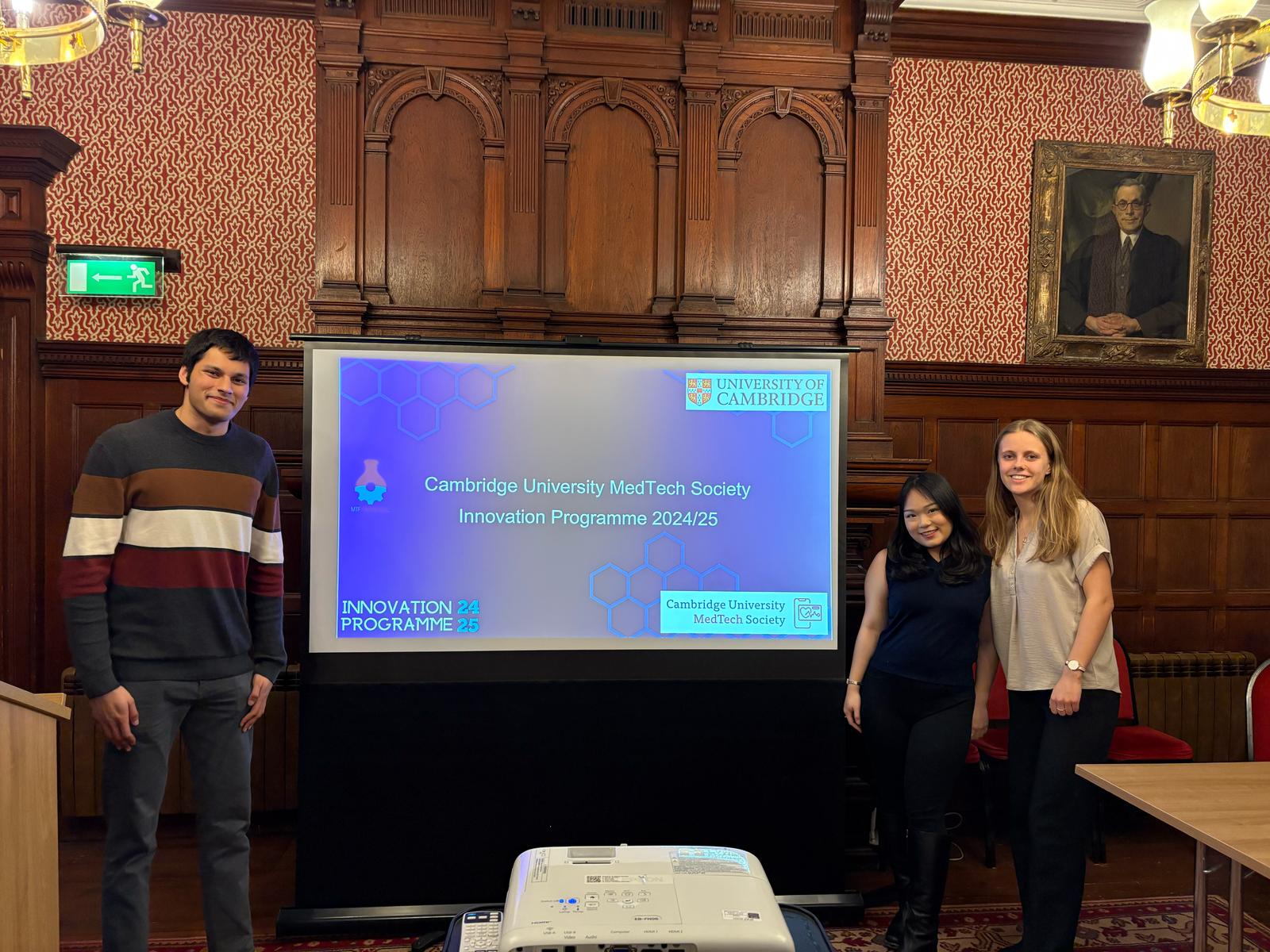
My Experience in the MedTech Foundation Innovation Programme
After attending several MedTech and biotech conferences, hackathons, and workshops, I came to realise that truly understanding the field requires going beyond surface-level exposure - it means going deep into a specific clinical problem and exploring how technology can solve it.
To gain that experience, I applied to the Cambridge MedTech Foundation Innovation Programme — a four-month educational initiative that introduces students to the landscape of medical device development with mentorship and workshops.
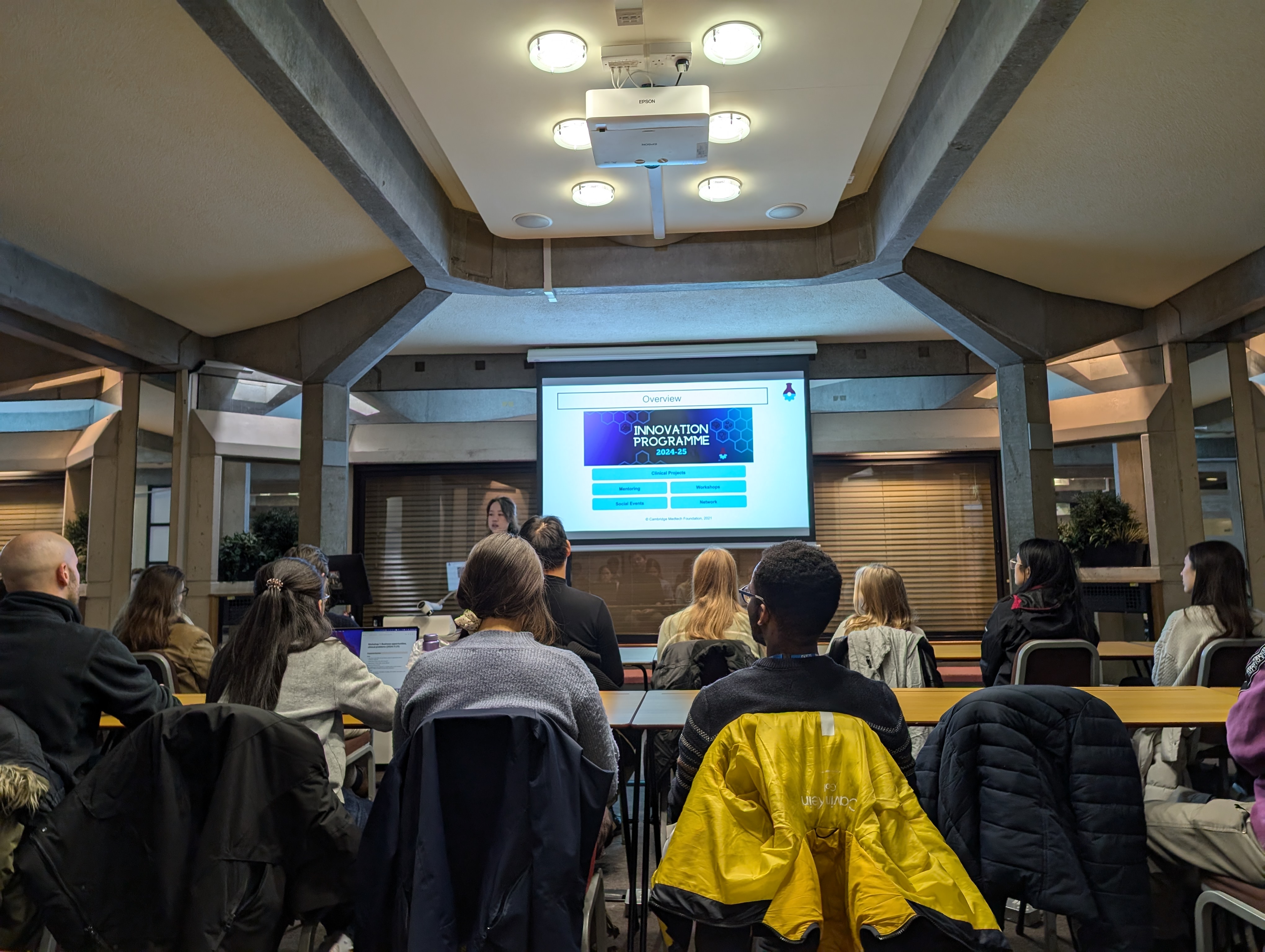
At the start of the programme, we were presented with a series of real-world clinical challenges from practising clinicians, each with rich context and unmet needs. Our options included:
- CSF diagnostics: designing low-cost, portable tools to improve access and accelerate diagnosis of meningitis in resource-limited settings
- Intraoperative neuronavigation tools: developing affordable technology to help surgeons navigate the brain safely and accurately during surgery
- Cannulation: creating point-of-care guidance systems to improve success rates in cannulation procedures
I chose to work on the CSF diagnostics project, and was placed in a multidisciplinary team combining expertise from medicine, engineering, and business. With support from our facilitator and clinical, technical, and business mentors, we were given the freedom to define our own approach to tackling the problem - an experience that was both challenging and immensely rewarding. For more information on the format, take a look at our MedTech IP 2025-26 Booklet!
A Four-Month Journey
We began the project by establishing a team working contract, defining our roles and expectations for effective collaboration by reducing task conflicts. From there, we progressed through a structured sequence of workshops that supported us as we developed our project deliverables - starting with an abstract outlining our proposed solution, followed by a 1500-word executive summary, and finally a pitch deck presented to a panel of judges.
Over the course of four months, we took part in a comprehensive programme of workshops, mentorship, and milestone submissions that guided us through every stage of the MedTech innovation process. Each session added a new layer of insight - from identifying clinical needs and designing solutions, to evaluating feasibility and building a viable business case.
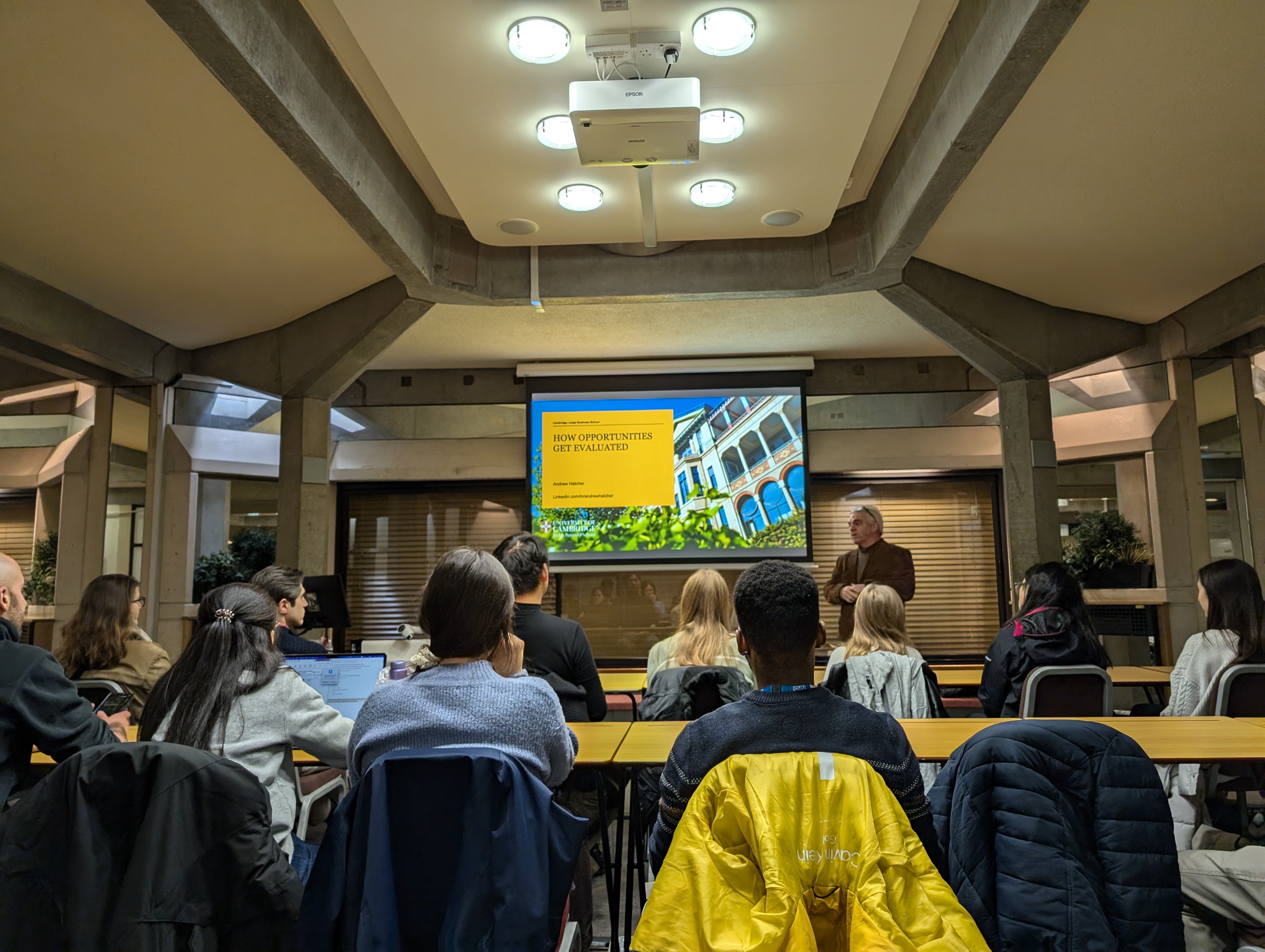
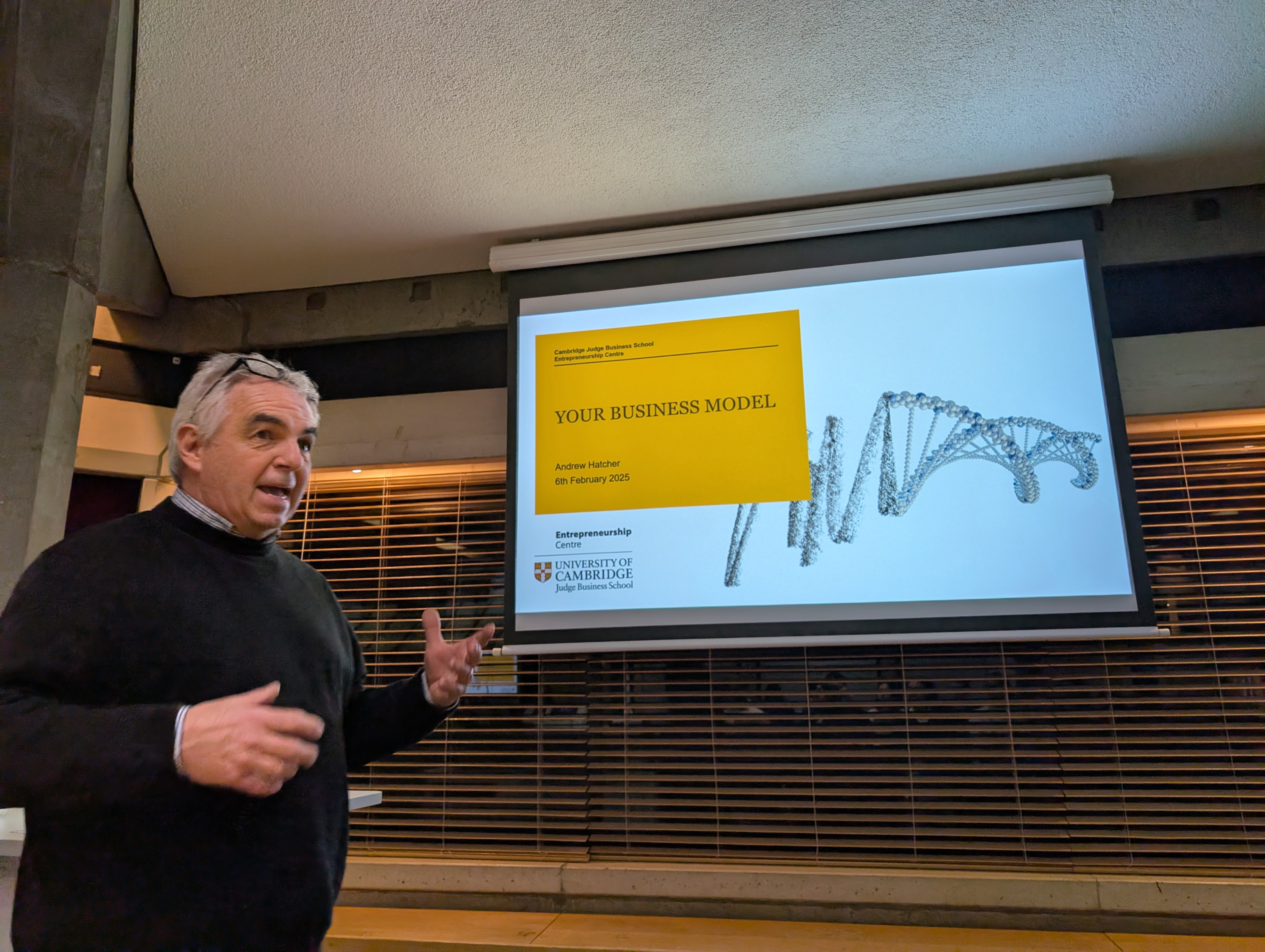
Workshop 1: Opportunity Evaluation
Led by: Andrew Hatcher, Cambridge Judge Business School
This session focused on how to identify and evaluate unmet clinical needs, assess feasibility, and define clear value propositions — forming the foundation of successful healthcare innovation.
We explored the investor mindset, delving into the due diligence process and analysing key dimensions such as customer and market fit, product feasibility, team dynamics, financial sustainability, and risk assessment.
Workshop 2: Concept Generation
Led by: Clinical Engineering Innovation (Cambridge University Hospitals) & Professor Andrew Grace
This session explored how ideas evolve within real clinical environments, highlighting the process of transforming unmet clinical needs into viable innovation projects. We gained insight into how interdisciplinary collaboration between clinicians, engineers, and entrepreneurs drives the development of impactful MedTech solutions.
Workshop 3: Business Model Canvas
Led by: Andrew Hatcher, Cambridge Judge Business School
In this session, we were introduced to the Business Model Canvas - a strategic framework for mapping out how an idea can deliver and capture value. It helped us visualise the commercial sustainability of our concept while ensuring it remained clinically meaningful and patient-focused.
Workshop 4: From Concept to Product
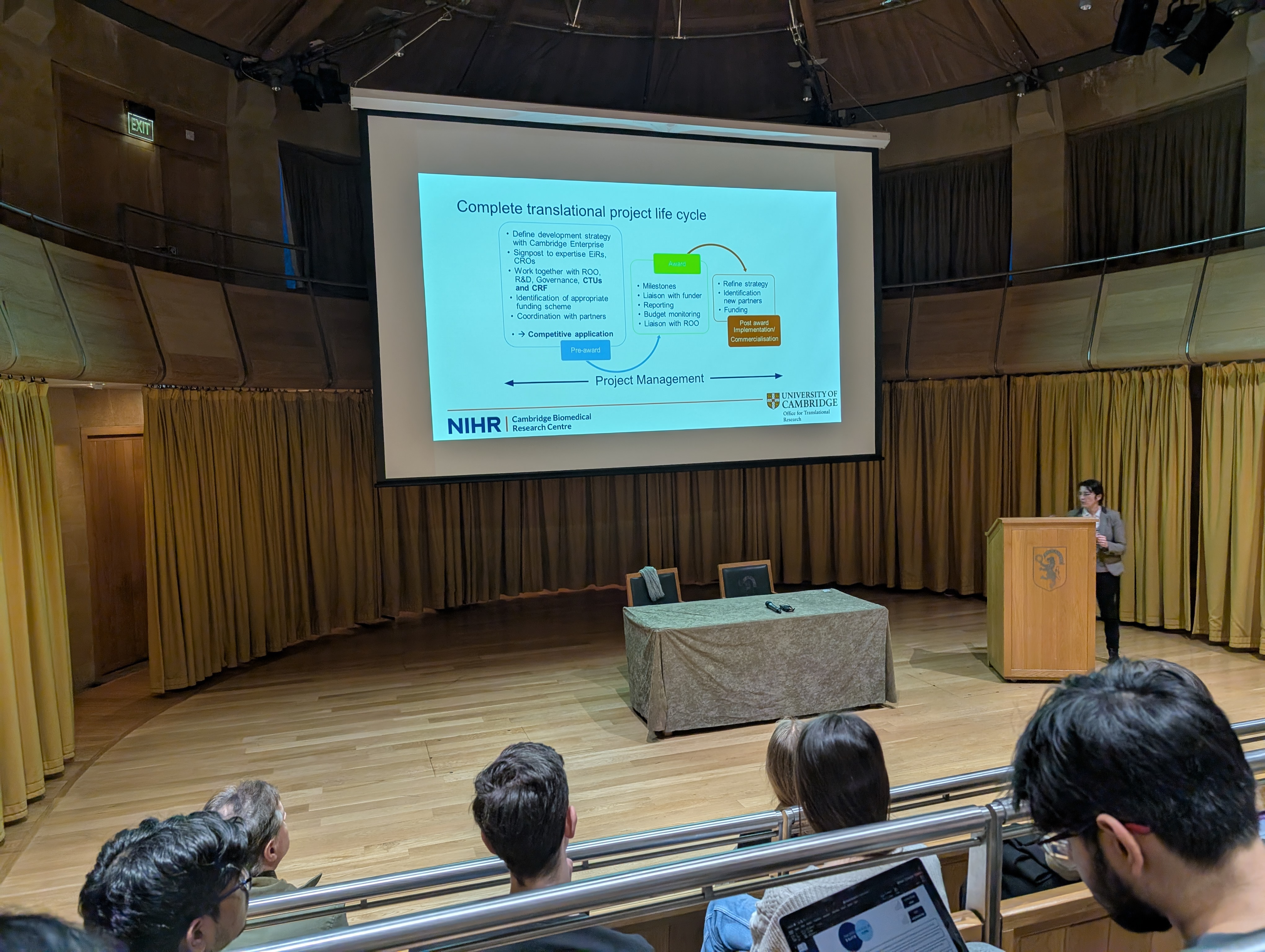
Led by: Dr Anita Marguerie de Rotrou (Office for Translational Research), Team Consulting, and Anna Davies (Cambridge Enterprise)
This session explored the journey from initial concept to approved medical device, covering key aspects such as regulatory strategy, prototyping, and intellectual property management. Through insights from industry and translational experts, we gained a clearer understanding of the real-world pathway that transforms innovation into clinical application.
Workshop 5: How to Pitch
Led by: Simon Hall, Communications Expert and Course Leader at the University of Cambridge
In the final session, we learned how to communicate complex technical ideas with clarity and impact — a vital skill for pitching innovations to investors, clinicians, and other stakeholders. Simon shared practical techniques to craft compelling narratives, structure persuasive presentations, and deliver them with confidence.

Mentorship and Deliverables
Throughout the programme, our progress was supported by mentors from clinical, technical, and business backgrounds, whose guidance was invaluable in refining our device concept and ensuring it addressed a genuine clinical need.
Our mentors included:
- Dr Sara Venturini – Clinical Mentor (Specialty Registrar in Neurosurgery, Cambridge University Hospitals NHS Foundation Trust), who advised on the medical relevance and diagnostic feasibility of our device.
- Richard Armstrong-Wood – Technical Mentor (Design and Innovation Engineer, Department of Engineering, University of Cambridge), who guided us on engineering design, functionality, and practical implementation.
- Harry Bullimore – Business Mentor (Senior Research Executive, Vox.Bio), who helped us strengthen our commercial strategy and understand market positioning.
- Vic Xiao – Team Facilitator, who ensured our workflow remained focused, collaborative, and well-structured.
- Yuqing (Clara) Chen – IP Director, who provided insights into intellectual property management and protection.
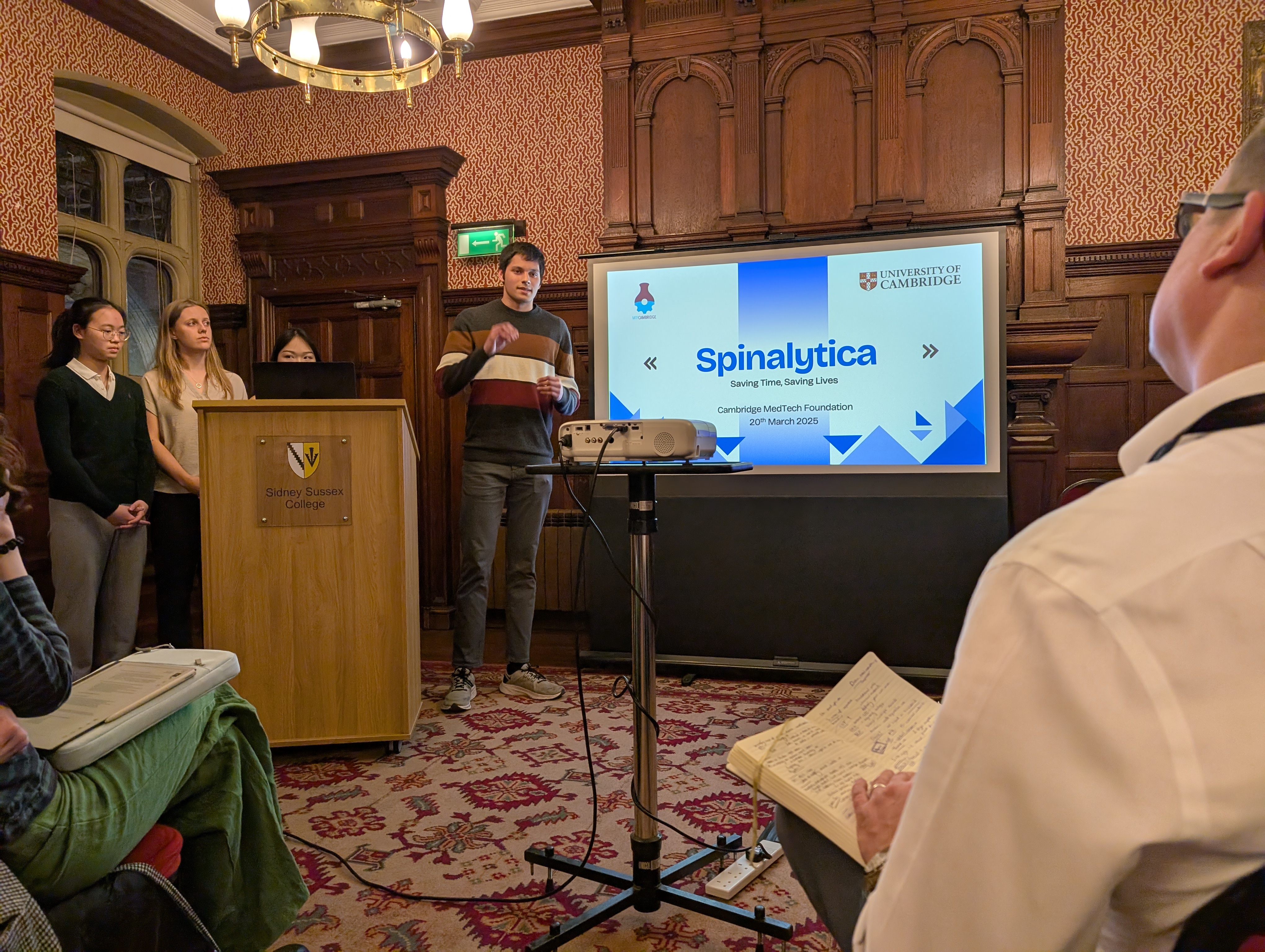
The pitch presentation was a particularly rewarding experience - an opportunity to bring together everything we’d learned and communicate our concept to experts in MedTech, entrepreneurship, and healthcare innovation.
Reflections
At first, I expected the programme to provide a general overview of MedTech - but it turned out to be far more useful. It offered a clear framework for how healthcare innovations are conceived, validated, and developed, showing me how to bridge the gap between clinical practice and product design through collaboration between medicine, engineering, and business.
It also gave me a deeper appreciation for how clinical insight becomes scalable innovation when design, regulation, and business strategy align. Above all, it reinforced that true innovation lies not in technology itself, but in its ability to improve patient outcomes.